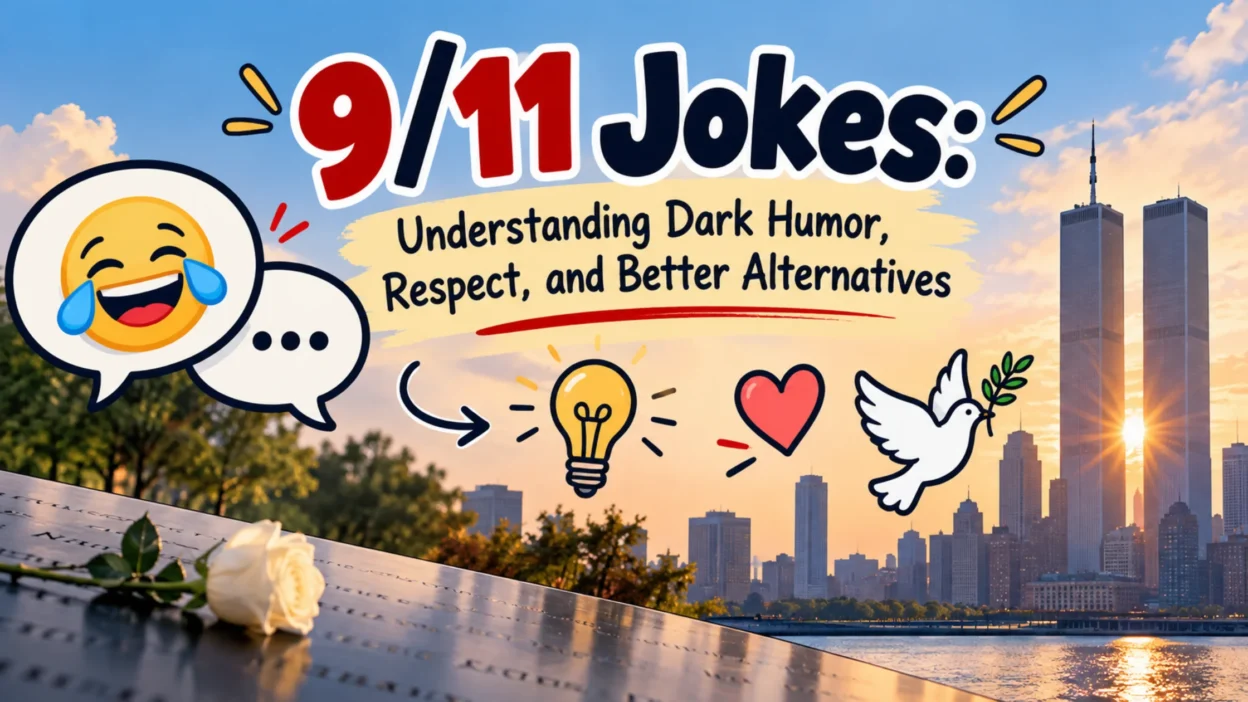
The phrase 9/11 jokes can refer to humor connected to one of the most tragic events in modern history.
Because the topic involves real lives, grief, and lasting trauma, humor around it needs careful boundaries.
This guide looks at why people use tragedy-based humor, where those jokes can become harmful, and how to choose safer alternatives. Readers interested in understanding other sensitive comedy styles can also explore this guide to dark humor jokes.
The goal is to understand the subject without making victims or survivors the target of humor. Malaika
9/11 Jokes and the Meaning Behind Tragedy Humor
Humor can appear in difficult situations, but the subject and target matter greatly.
- Tragedy humor often develops around major historical events.
- People sometimes use humor as a way to process difficult emotions.
- Humor can also help people discuss uncomfortable subjects.
- Not every form of humor has the same effect on every audience.
- A joke can feel harmless to one person and deeply hurtful to another.
- The passage of time does not automatically make every joke appropriate.
- Personal experience can strongly affect how someone views tragedy humor.
- A person’s intention may differ from the impact of their words.
- Humor about real suffering requires extra care.
- Public settings usually need stronger boundaries than private conversations.
- Family-friendly content should avoid turning real victims into punchlines.
- Respectful humor can focus on harmless situations rather than human suffering.
- Context can completely change how a humorous statement is received.
- Good judgment matters more than simply trying to get a reaction.
- Responsible humor leaves room for empathy.
9/11 Jokes and Historical Context
Understanding the event’s historical importance helps explain why jokes about it can be especially sensitive.
- September 11, 2001, became a major turning point in modern history.
- Thousands of people were directly affected by the attacks.
- Families lost loved ones.
- Survivors carried lasting memories of the event.
- Emergency workers faced extraordinary circumstances.
- The event affected communities far beyond the immediate locations.
- News coverage brought the tragedy into homes around the world.
- The event changed public conversations about security and terrorism.
- Many people remember exactly where they were when they heard the news.
- Historical events can carry emotional meaning for generations.
- The effects continued long after the day itself.
- Schools, workplaces, and families often discuss the event as history.
- Historical distance does not erase personal memories.
- Understanding context encourages more thoughtful communication.
- Respect for history helps prevent careless treatment of real suffering.
9/11 Jokes and Respect for Victims
The people connected to September 11 were real individuals with families, careers, hopes, and everyday lives.
- Victims should never be reduced to punchlines.
- Families may continue to experience grief years later.
- Survivors can have strong emotional connections to the event.
- First responders faced serious risks while helping others.
- Many people worked together during the emergency.
- Respectful discussion keeps human lives at the center.
- A person’s identity should be remembered beyond the circumstances of their death.
- Historical discussions can honor people without sensationalizing suffering.
- Empathy helps create healthier conversations.
- Humor should not require someone else’s pain to be the punchline.
- Sensitive subjects deserve thoughtful language.
- Public content can reach people with unknown personal experiences.
- A creator cannot always know who may be affected by a joke.
- Respectful storytelling can educate without exploiting tragedy.
- Compassion is more valuable than shock value.
9/11 Jokes and Dark Humor
Dark humor can serve different purposes, but it can also create serious problems when the subject involves mass tragedy. Readers looking for edgy humor that is not centered on this historical event can browse dark pickup lines instead.
- Dark humor often deals with uncomfortable subjects.
- Some people use it to manage fear or stress.
- Others use it to challenge social expectations.
- Some audiences enjoy edgy humor without intending harm.
- Other audiences may find the same material deeply offensive.
- Personal boundaries vary widely.
- Dark humor is not automatically harmless because it is labeled comedy.
- Context matters when discussing sensitive subjects.
- The target of the joke matters even more.
- Humor aimed at powerful systems differs from humor aimed at victims.
- A joke about an abstract idea may feel different from a joke about a grieving family.
- Timing can affect how humor is received.
- Audience expectations also matter.
- Responsible creators consider possible consequences before publishing.
- Good comedy does not need to ignore empathy.
9/11 Jokes and Comedy Boundaries
Comedy works best when audiences understand the intention and the target.
- Every joke has a subject and a target.
- The target can determine whether humor feels playful or cruel.
- Punching at innocent victims creates a very different effect from criticizing institutions.
- Satire can question decisions without mocking suffering.
- Absurd humor can create distance from serious subjects.
- Wordplay can be funny without referring to real victims.
- Fictional situations offer more creative freedom.
- Everyday misunderstandings are safer comedy material.
- Family-friendly humor benefits from clear boundaries.
- Shock value is not the only way to attract attention.
- Clever writing can be memorable without being cruel.
- Good timing improves humor.
- Strong storytelling can replace offensive punchlines.
- Audience awareness helps prevent unnecessary harm.
- Respect can coexist with creativity.
9/11 Jokes and Social Media
Online humor can spread quickly, which makes responsible content choices especially important.
- A joke posted online can reach thousands of strangers.
- Social media removes much of the personal context found in private conversations.
- Text can also make tone difficult to understand.
- A creator may intend irony while readers interpret cruelty.
- Viral content can travel far beyond its original audience.
- Sensitive topics can attract attention for the wrong reasons.
- Engagement does not always mean approval.
- A controversial post may receive reactions because people dislike it.
- Screenshots can preserve content long after deletion.
- Online audiences include people from many backgrounds.
- Global audiences may have different cultural expectations.
- Family-friendly websites benefit from safer humor.
- Brand reputation can be affected by insensitive content.
- Responsible creators consider both immediate and long-term effects.
- Thoughtful editing can prevent avoidable problems.
9/11 Jokes and Family-Friendly Humor
Family-friendly humor can still be clever without using real tragedies as punchlines. Collections such as corny jokes show how simple wordplay can create laughs without relying on sensitive subjects.
- Choose fictional situations for playful humor.
- Use harmless misunderstandings as comedy material.
- Try animal jokes for younger audiences.
- Use school situations for relatable humor.
- Everyday technology can provide endless funny ideas.
- Food jokes are usually easy to adapt for families.
- Weather creates many harmless comedy situations.
- Travel mishaps can inspire light humor without targeting victims.
- Wordplay can create clever jokes without sensitive subjects.
- Silly exaggeration works well for all ages.
- Funny observations can replace shock humor.
- Character-based comedy allows creative storytelling.
- Friendly competition can create playful situations.
- Unexpected but harmless endings can make jokes memorable.
- Positive humor leaves audiences smiling rather than uncomfortable.
9/11 Jokes and Respectful Alternatives
When a topic is highly sensitive, changing the subject can create better and safer content.
- Use general history humor without mocking real victims.
- Write jokes about fictional historians.
- Create playful jokes about old calendars.
- Use harmless museum humor.
- Explore funny classroom situations.
- Create jokes about confusing timelines.
- Use fictional time-travel characters.
- Write jokes about students trying to remember dates.
- Create wordplay around historical vocabulary.
- Use imaginary history quizzes.
- Make fictional characters argue about dates.
- Write light jokes about oversized textbooks.
- Create humor about forgetting homework.
- Use playful library situations.
- Build comedy around harmless historical misunderstandings.
9/11 Jokes and Educational Content
Sensitive historical topics can be discussed responsibly through clear and factual educational content.
- Explain events without sensational details.
- Focus on historical context.
- Discuss how communities responded.
- Highlight the importance of remembering victims.
- Explain how emergency workers responded.
- Explore changes that followed the event.
- Encourage respectful classroom discussion.
- Use age-appropriate language for younger readers.
- Avoid unnecessary graphic descriptions.
- Separate historical facts from internet humor.
- Encourage critical thinking about online content.
- Explain why different audiences react differently.
- Discuss media responsibility.
- Encourage empathy when discussing loss.
- Treat historical memory as a serious subject.
9/11 Jokes and Internet Culture
Internet culture can turn serious subjects into trends, but popularity does not automatically make content appropriate.
- Online communities develop their own humor styles.
- Memes often rely on speed and simplicity.
- Context can disappear when content is reposted.
- A meme may be understood differently by different audiences.
- Viral jokes can become detached from their original setting.
- Algorithms can reward attention rather than sensitivity.
- Shock content may attract clicks without adding value.
- Responsible creators can choose better ways to gain engagement.
- Humor does not need controversy to become shareable.
- Clever observations can perform well without offensive themes.
- Positive humor can create stronger communities.
- Educational content can also be engaging.
- Contextual storytelling can improve understanding.
- Audiences appreciate content that respects boundaries.
- Sustainable content is usually better than temporary outrage.
9/11 Jokes and Audience Sensitivity
Knowing your audience is one of the most important parts of responsible humor.
- Children need age-appropriate content.
- Families often prefer clean humor.
- Schools require careful treatment of historical tragedy.
- Businesses should protect professional standards.
- Public websites can reach people with unknown experiences.
- International audiences may have different cultural perspectives.
- Survivors may have personal reactions to sensitive material.
- Families of victims may view the subject very differently.
- Personal experience affects emotional responses.
- A joke that works among close friends may fail publicly.
- Audience expectations shape how humor is interpreted.
- Sensitive content can create unintended consequences.
- Empathy helps creators understand different perspectives.
- Responsible writers consider who may read their work.
- Good audience awareness makes content stronger.
9/11 Jokes and Responsible Writing
Writers can create engaging content without relying on tragedy for entertainment. Intentionally harmless collections such as bad jokes are an easy example of humor that can entertain without targeting real suffering.
- Choose a clear purpose before writing.
- Identify the intended audience.
- Consider the emotional weight of the topic.
- Avoid turning victims into comedic targets.
- Remove unnecessary shock elements.
- Replace harmful punchlines with harmless wordplay.
- Use fictional examples when possible.
- Keep language simple and clear.
- Explain sensitive ideas instead of exploiting them.
- Review content from multiple perspectives.
- Ask whether the humor adds genuine value.
- Consider how a stranger might interpret the statement.
- Avoid jokes that depend on suffering.
- Keep educational information accurate.
- Edit anything that feels needlessly cruel.
9/11 Jokes and Satire
Satire can address serious issues, but its target should be carefully chosen.
- Satire often criticizes systems, ideas, or powerful institutions.
- Effective satire has a clear target.
- Victims should not become the main target.
- Political decisions can be discussed separately from human suffering.
- Institutional failures can be examined through serious commentary.
- Satire can encourage people to think critically.
- Clever exaggeration can expose contradictions.
- Fictional settings can make difficult ideas easier to explore.
- Strong satire usually has a purpose beyond shock.
- Context helps audiences understand the intended criticism.
- Good satire can challenge assumptions.
- Humor can coexist with serious analysis.
- Responsible satire avoids unnecessary cruelty.
- Clear targets make satire more effective.
- Thoughtful satire can encourage discussion rather than harm.
9/11 Jokes and Comedy for Kids
Children need humor that is simple, safe, and appropriate for their age. For seasonal family humor, Halloween jokes for kids provide a much lighter alternative.
- Use animals as funny characters.
- Create silly school situations.
- Try playful food jokes.
- Use harmless wordplay.
- Write jokes about toys and games.
- Make fictional characters behave unexpectedly.
- Use funny weather situations.
- Create jokes about messy bedrooms.
- Explore humorous family routines.
- Use playful sports situations.
- Write jokes about homework.
- Create silly stories about pets.
- Use harmless technology jokes.
- Build humor around everyday mistakes.
- Keep the punchline positive.
9/11 Jokes and Better Content Ideas
Writers looking for traffic can choose many safer topics that still offer strong entertainment value.
- Historical facts can become educational content.
- General history jokes can provide light humor.
- Classroom jokes can appeal to families.
- School puns are easy to share.
- Animal jokes work across many age groups.
- Holiday jokes can attract seasonal searches.
- Birthday jokes offer evergreen content.
- Family jokes create broad appeal.
- Clean workplace jokes can reach adult readers.
- Dad jokes remain highly shareable.
- Food jokes offer endless possibilities.
- Travel jokes can be relatable.
- Technology jokes can attract younger audiences.
- Weather jokes work throughout the year.
- Everyday-life humor creates strong reader connection.
Readers who prefer classic clean humor can explore these best dad jokes for another shareable option.
9/11 Jokes and Search Intent
Understanding search intent helps writers create content that actually satisfies readers.
- Searchers may be looking for humor.
- Others may be researching the meaning of the phrase.
- Some users may be exploring internet culture.
- Others may want to understand why the subject is controversial.
- Search intent can vary greatly around sensitive keywords.
- A title should accurately describe the article.
- Content should not promise jokes that it does not provide.
- Clear headings improve navigation.
- Helpful explanations can satisfy informational searches.
- Related terms should appear naturally.
- Keyword use should never reduce readability.
- Search-friendly writing should still prioritize users.
- Useful content builds trust.
- Honest titles create better expectations.
- Good SEO begins with helpful information.
9/11 Jokes and Search-Friendly Alternatives
Writers can build related content around safer humor topics.
- History jokes can provide a broad alternative.
- School history jokes can target students.
- Clean dark humor can be discussed without targeting real victims.
- Funny history facts can create educational entertainment.
- Historical puns can work well for social posts.
- Classroom humor can support educational websites.
- Museum jokes can provide family-safe entertainment.
- Time-travel jokes can create fictional scenarios.
- Calendar jokes are simple and evergreen.
- Geography jokes offer many harmless possibilities.
- Book jokes work well for students.
- Teacher jokes can be adapted for classrooms.
- Library jokes are suitable for many audiences.
- Science jokes can add educational value.
- General clean jokes can reach a much wider audience.
For classroom-focused humor, the site’s teacher jokes offer another natural alternative.
9/11 Jokes and Positive Humor
Positive humor does not need tragedy to create strong reactions.
- A good joke can brighten someone’s day.
- Clean humor can bring different age groups together.
- Positive jokes are easier to share.
- Family-safe content can reach a wider audience.
- Kind humor creates fewer uncomfortable moments.
- Clever wordplay can be highly memorable.
- Silly situations can produce natural laughter.
- Funny observations can make ordinary life entertaining.
- Positive comedy can build community.
- Good humor can encourage conversation.
- Simple jokes are easy to understand.
- Relatable humor often performs well.
- Safe humor can be useful for brands and schools.
- Cheerful content can support positive engagement.
- The strongest punchline does not need a real tragedy.
9/11 Jokes and Ethical Humor Choices
Ethical humor means thinking about people as well as entertainment.
- Consider who may be affected.
- Think about the target of the joke.
- Avoid exploiting real suffering.
- Respect victims and survivors.
- Keep vulnerable people out of the punchline.
- Use fictional situations when possible.
- Choose humor that adds value.
- Avoid unnecessary shock.
- Review content before publishing.
- Consider whether the joke could cause harm.
- Keep the intended audience in mind.
- Use empathy as part of the editing process.
- Prefer cleverness over cruelty.
- Remember that online content can travel widely.
- Choose humor that you can stand behind later.
9/11 Jokes and Safer Comedy
Safer comedy can still be funny, creative, memorable, and highly shareable. Animal-based humor such as frog jokes is one simple option that works without relying on real-world tragedy.
- Fictional characters can carry a joke without real victims.
- Animals can create playful comedy.
- School situations offer endless material.
- Food creates easy punchlines.
- Everyday mistakes are relatable.
- Technology provides modern comedy topics.
- Family routines can inspire clean humor.
- Travel situations can create funny misunderstandings.
- Sports can provide playful competition.
- Weather can create silly situations.
- Wordplay can make simple topics entertaining.
- Unexpected endings can create strong punchlines.
- Exaggeration can make ordinary events funny.
- Observational humor can connect with readers.
- Positive comedy can leave everyone comfortable.
FAQs About 9/11 Jokes
Why are 9/11 jokes considered sensitive?
The phrase relates to a real mass-casualty event involving victims, survivors, families, and emergency workers. Humor about such an event can cause genuine emotional harm.
Can people discuss 9/11 jokes without making them?
Yes. The subject can be discussed from cultural, historical, ethical, educational, or media perspectives without turning the victims or tragedy into entertainment.
Why does dark humor appeal to some people?
Dark humor can sometimes help people process difficult emotions, reduce tension, or discuss uncomfortable subjects. However, personal reactions vary greatly.
What are safer alternatives to 9/11 jokes?
Safer alternatives include clean history jokes, school jokes, animal jokes, fictional historical humor, calendar jokes, classroom puns, and general family-friendly comedy. For a broader collection of intentionally simple humor, try these best dad jokes ever.
Can sensitive topics be used in educational content?
Yes. Educational content can discuss difficult historical events respectfully by focusing on facts, context, remembrance, and responsible communication.
Conclusion: 9/11 Jokes and Responsible Humor
The phrase 9/11 jokes exists within a difficult area of humor where comedy, history, grief, and personal experience can overlap. Understanding those boundaries is more valuable than simply trying to create shock.
For family-friendly and shareable content, safer humor offers many better options. Choose clever wordplay, fictional situations, everyday observations, and positive comedy that can make people laugh without making real suffering the punchline.